RESPIRATION
MECHANICS &
PROTOCOLS
The clinical database of breathwork. Stripping away the mysticism to focus on physiology, carbon dioxide tolerance, and the autonomic nervous system.
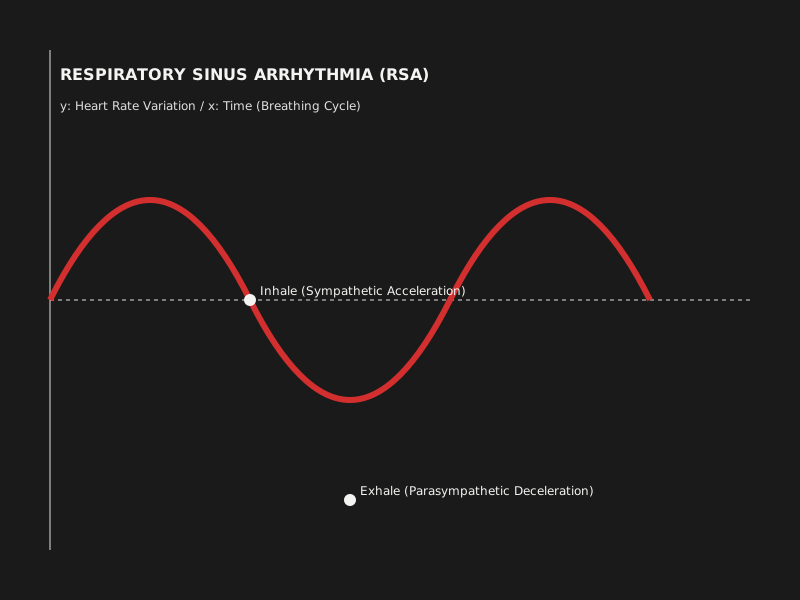
Respiratory Sinus Arrhythmia (RSA)
Every time you inhale, your heart rate speeds up (sympathetic activation). Every time you exhale, it slows down (parasympathetic activation via the vagus nerve).
This variance is called Heart Rate Variability (HRV). Breathing at exactly your resonant frequency (typically ~5.5 breaths per minute) maximizes this oscillation, improving cardiovascular resilience and emotional regulation.
Calculate Resonant FrequencyEvidence-Based Modalities
Reduced Volume
Goal: Increase CO2 tolerance.
Techniques like Buteyko train the chemoreceptors to tolerate higher CO2, reducing baseline anxiety and minute volume.
Explore ButeykoResonance Frequency
Goal: Maximize HRV.
Breathing at approximately 5.5 breaths per minute to synchronize respiratory sinus arrhythmia with the baroreflex.
Explore ResonanceTummo / Hyperventilation
Goal: Sympathetic spike.
Techniques that temporarily alkalinize the blood and trigger epinephrine release, followed by prolonged breath holds.
Explore Tummo10 Clinical Assessment Tools
Don't guess your baseline. Use our 10 validated Javascript tools to calculate exact physiological metrics locally on your device.
BOLT Score
Measure baseline CO2 sensitivity.
Minute Volume
Estimate total L/min air exchange.
Cadence Calc
Get exact inhale/exhale ratios.
Apnea Tracker
Log hold times and progression.
Sleep Latency
Analyze protocols for sleep onset.
Altitude SpO2
Estimate oxygen sat. drops.
NO Timer
Estimate sinus nitric oxide pooling.
Vital Capacity
Predict lung volume baselines.
The Danger of
Chronic Overbreathing
Most modern adults suffer from hidden hyperventilation. The assumption that "more air equals more oxygen" is physiologically false.
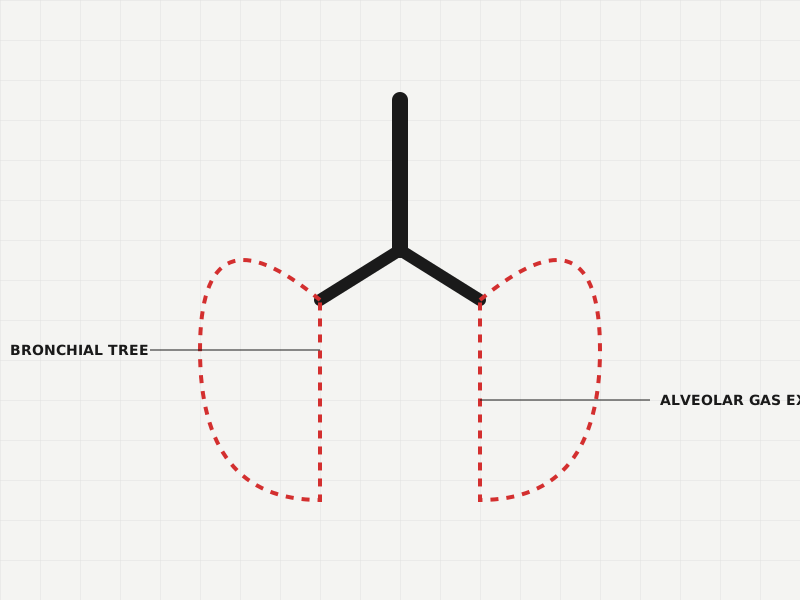
- Mouth Breathing: Bypasses nitric oxide production and destroys alveolar gas exchange efficiency.
- Chest Breathing: Chronic apical breathing locks the nervous system in sympathetic "fight or flight" mode.
- Heavy Breathing: Blows off too much CO2, constricting blood vessels to the brain.
Situational Protocols
Acute Anxiety Downregulation
The "Physiological Sigh": Two quick inhales through the nose, followed by a long, slow sigh out through the mouth. Repeated 3 times. Instantly offloads CO2 and forces parasympathetic tone.
Read the clinical protocol →Sleep Onset (Insomnia)
The 4-7-8 Protocol or prolonged exhalation techniques (4 seconds in, 8 seconds out). The key is the extended exhalation dragging the heart rate down.
Read the sleep protocol →Need Clinical Guidance?
Breathwork can profoundly alter blood chemistry. If you are dealing with asthma, panic disorders, or cardiovascular issues, consult a certified practitioner.
Search Practitioner DirectoryBreaths taken by an average adult per day.
Optimal resting minute volume.
The average human resonant frequency.